
One day a month. That’s not much. And yet, it’s often enough to set in motion a real strategic turning point.
The myth of the full-time CFO is persistent. But in an SME or a startup, it is neither necessary nor ideal. What’s needed is clarity, guidance, and better-informed decisions.
Here's what an experienced part-time CFO can actually accomplish in one day a month.
The dashboard is our top priority when we start a project. That’s because, in order to identify actions to take, we need to thoroughly understand the business’s cash flows. And the business owner wants a clear, up-to-date view of their finances—not just a single update once a year.
A concrete example
For a construction company managing multiple projects simultaneously, our CFOs implemented a system to track profitability on a project-by-project basis.
This analysis revealed that one project manager in particular stood out for his superior management skills, resulting in significant gains in productivity and profit margins.
Result
Our client has decidedto increase the volume of projects assigned by this partner by 30 percent, prioritizing the most successful collaborations.
Depending on the business, it is necessary to identify low-profitability segments—whether they are products, projects, or, in some cases, certain customers. The goal is to identify what generates revenue and what incurs costs (in terms of both money and time) and, above all, to understand why.
A concrete example
For one of our franchisor clients, opening a retail location required the purchase of a set of standardized machines.
Our analysis showed that one of these machines, despite being systematically mandated, generated at best only 5% of revenue.
Result
By removing this machine from the initial package, we were able to reduce capital expenditures (CAPEX) by 15% at launch, without significantly impacting revenue at the new retail locations (the observed variance was less than 2–3%).
It is essential to implement a simple, actionable cash flow model. This model uses your customer invoices, supplier invoices, and personnel expenses to project your cash flow over the next three months. The goal is to anticipate cash flow pressures and detect any cash shortfall—even a minor one—in advance so you can take action before it’s too late.
A concrete example
At the start of a project with a SaaS company, a major algorithm change rendered the application unusable for four weeks. The company then had cash reserves to last barely 2.5 months if revenue were to come to a complete halt, putting its business continuity at immediate risk.
Result
Thanks to a clear understanding of our financial situation, we launched a priority “cash project, ” which helped secure and expedite cash collections, rapidly improving our available cash flow and stabilizing operations while we worked on a technical solution.
We regularly hold a quick meeting with your accountant to compare actual data with forecasts. We immediately identify significant discrepancies (missing invoices, incorrectly reported VAT, data entry errors) and flag operational bottlenecks. The goal: to regain control of the numbers so we can anticipate issues rather than react to them.
Before approving a strategic investment (such as the purchase of equipment, a new hire, or an R&D or sales project), our CFOs conduct a quick and structured analysis: expected return on investment, impact on cash flow, and possible financing options. This helps you make a well-informed decision and ensures that it aligns with a coherent financial strategy.
A targeted review of your fixed costs helps identify items that are excessive or unprofitable. By comparing your expenses to your revenue and industry benchmarks, the CFO proposes concrete ways to optimize them:
The goal: to scrutinize every non-strategic expense and maximize savings without compromising the company’s efficiency.
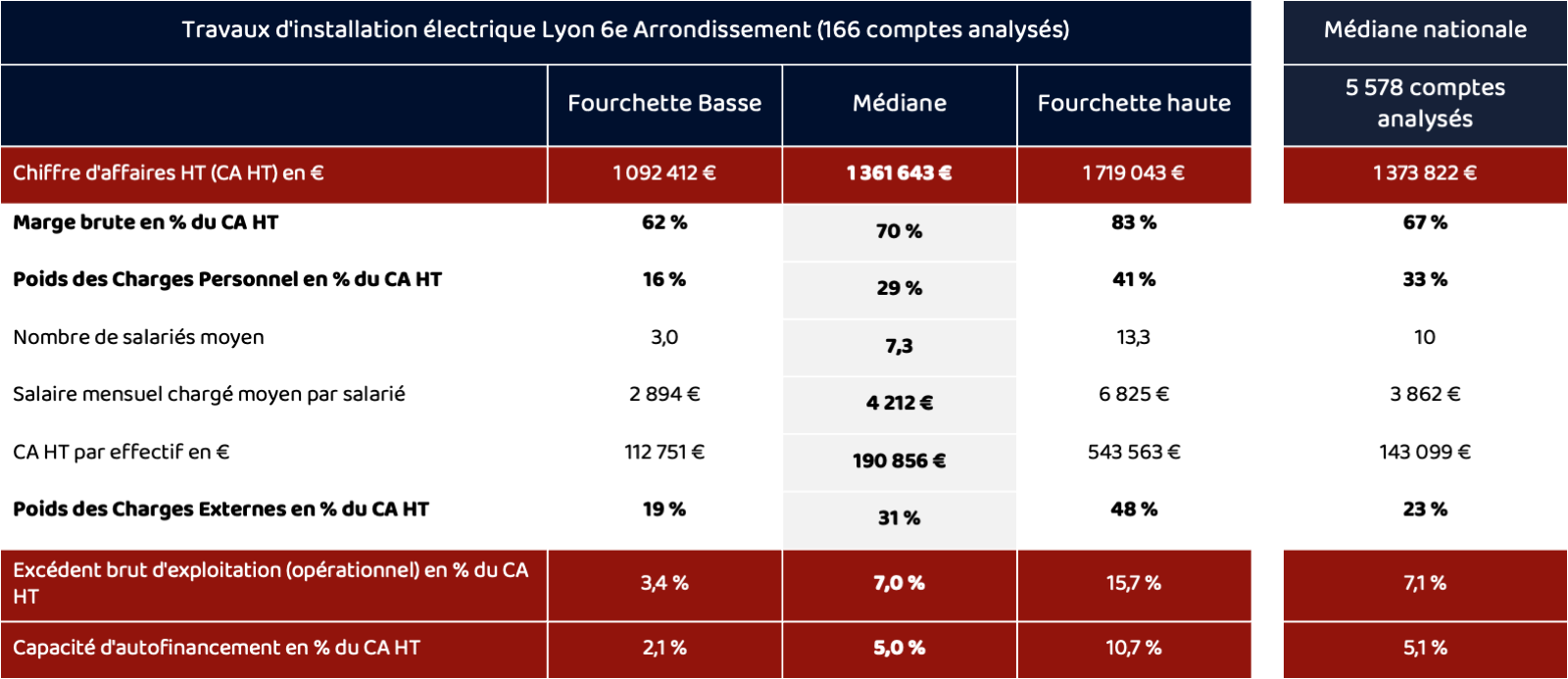
As a leader, it’s normal not to be familiar with all the financial metrics for every business unit. Without industry benchmarks, it becomes difficult to distinguish between what is acceptable and what can be optimized.
By analyzing several thousand comparable companies, we provide an objective view of your industry. This allows us to clearly identify areas for improvement: adjusting your prices, reducing certain expenses, improving productivity, or better sizing your team.
Each day of the assignment includes a one-hour strategic discussion with the executive to gain a broader perspective on current issues.
Ongoing projects, budget trade-offs, subtle market signals: these informal discussionshelp with prioritization,inform key decisions, and prevent blind spots. The CFO does not replace the CEO; rather, the CFO challenges the CEO to sharpen their clarity of thought and their ability to take action.
At the end of each day, the CFO produces a concise, visual summary: one slide outlining the current financial situation, areas of concern, and decisions made.
This document is designed to be shared with partners, managers, and employees— without jargon or an overload of information.
Objective: to turn uncertainty into a clear direction and get everyone on board with a structured approach to management.
A clear, structured, and shared view of your performance
Cash flow under control (and often improved by 20,000 to 30,000 euros without raising funds)
More Focused and Faster Decisions
A Stronger Leadership Presence
A coherent and structured financing plan
Doesn't that seem impossible to do in one day?
Yet at Kashflo, that’s exactly what we do every day.
And the results speak for themselves:
It all starts with one good day.
When one of our CFOs steps in for two days a month, they don’t just lay the groundwork—they take a truly dynamic approach to management. This pace allows us to go beyond a monthly snapshot to anticipate, compare, and optimize. The company shifts from a defensive management style to a proactive and strategic approach.
By dedicating two days a month to this work, the CFO can refine profitability analysis by product, channel, or team. This makes it possible to quickly refocus efforts on the most profitable activities. Dashboards, meanwhile, become more comprehensive and integrated: accounting data, bank transactions, CRM, line-of-business tools… everything is centralized to provide a cross-referenced view of performance, cash flow, and organizational structure. This level of detail makes it possible to detect pockets of value or early warning signs that need to be addressed at a very early stage.
The cash flow forecast is no longer a static document. It is updated monthly, extended to cover a 6-month period, and incorporates realistic scenarios for growth, a decline in business, or delays in cash collections. We no longer have to deal with cash flow pressures—we see them coming several weeks in advance. The CFO also leads regular follow-ups with the accountant or the financial control manager, identifies billing delays, manages collections, and adjusts supplier payments. A cash-focused culture is taking root within the company.
Every major project—such as equipment purchases, new hires, or a new sales channel—undergoes a comprehensive review: expected ROI, impact on margins and cash flow, and alignment with the rest of the financial plan. At the same time, fixed costs are closely monitored on a month-by-month basis. The CFO identifies variances, detects unnecessary subscriptions or overpriced services, and implements targeted cost savings without compromising operational efficiency.
At this pace, the three-year forecast becomes a dynamic tool, not just a static exercise. It is updated regularly, reflects actual business and HR dynamics, and serves as a solid foundation for discussions with external partners: banks, investors, BPI, partners, and others. The CFO can also anticipate a fundraising round, prepare the financial pitch, model dilution or debt scenarios, and put together a credible proposal without wasting time.
Two days a month also provide an opportunity for two regular forums for discussion. On the one hand, a strategic meeting to take a step back and consider the big picture: vision, prioritization, and overall direction. On the other hand, a more operational meeting to review the numbers, ongoing initiatives, and alerts. Following these sessions, the CFO produces summary materials to be shared with the executive committee or partners: dashboards, alert notes, or management summaries. This provides substantive support that structures governance and strengthens the leader’s position.
At Kashflo, this two-day-a-month format is the one that generates the most measurable results for our clients.
You don't need a full-time CFO.
You need an experienced, dedicated, and organized CFO…two days a month.
What if the ideal solution were an outsourced CFO on a monthly flat-rate basis? With a defined, predictable level of involvement… but above all, one that’s truly useful.
At Kashflo, we designed this model so you can benefit from all the expertise of a CFO without the burden of hiring someone in-house.
Here's what a CFO on a monthly retainer actually offers you.
A company's business is never linear. There are slow months… and others when everything picks up: fundraising, acquisitions, hiring, product launches, cash flow pressures, and so on.
At times like these, you may need us for 5 or even 10 days a month, and that's perfectly normal.
Rather than billing based on time spent—which would quickly become unpredictable (and costly)— the monthly flat rate helps even out these fluctuations over the course of the year.
You benefit from flexible and reliable availability, without having to worry about the cost of each call. It’s a true long-term partnership approach, designed to give you breathing room, even during peak periods.
Every month, our CFOs analyze your performance: margin by product, profitability by business unit, and contribution by customer or channel. This analysis is not theoretical; it consistently leads to actionable operational recommendations and decisions.
At the same time, we set up customized dashboards connected to your real-time data (banking, billing, payroll, CRM, etc.) to give you a clear and up-to-date view of your business.
With a monthly subscription, cash flow management isn’t something you only think about at the end of the month—it’s a weekly habit. Our CFOs will create a rolling cash flow forecast for you, updated regularly, that takes into account your upcoming cash flows and the risks of variances.
We alert you when a cash crunch is on the horizon, suggest immediate corrective actions (invoicing, supplier negotiations, customer follow-ups), and help you establish a cash-focused culture within your company. You no longer have to deal with overdrafts—you anticipate them.
With our flat-rate consulting service, you benefit from ongoing, structured guidance on your strategic decisions. Whether it’s purchasing equipment, hiring staff, opening a retail location, launching an R&D project, or raising funds—every initiative is evaluated using a clear analytical framework (ROI, cash flow impact, financing plan, operational risk).
The CFO becomes the clear-headed and demanding co-pilot you’ve been waiting for.
Our fixed-fee CFOs don’t just create a one-time business plan. They develop and maintain a realistic financial plan, updated based on your goals, your progress, and unforeseen circumstances.
This plan serves as a solid foundation for discussions with banks, investors, BPI, or partners, and for anticipating your needs over the next 3, 6, or 12 months. Our CFOs also prepare all the key components: banking documentation, fundraising simulations, margin forecasts, financing structuring, and more.
Have you ever dreamed of resolving a situation in just two clicks? We can make it happen!
A good CFO does more than just analyze. He or she challenges your ideas and pushes you to weigh your options, make decisions, and set priorities.
Every month, you’ll have the opportunity to engage in strategic discussions where you can ask any questions, voice your concerns, and test your hypotheses. Afterward, you can present a clear summary to your partners, associates, or colleagues so that everyone is on the same page regarding the situation and priorities.
At Kashflo, the monthly plan is tailored to your needs.
You're in control. We'll guide you along the way—but not in your place.
A good CFO doesn't cost anything. He brings in revenue.